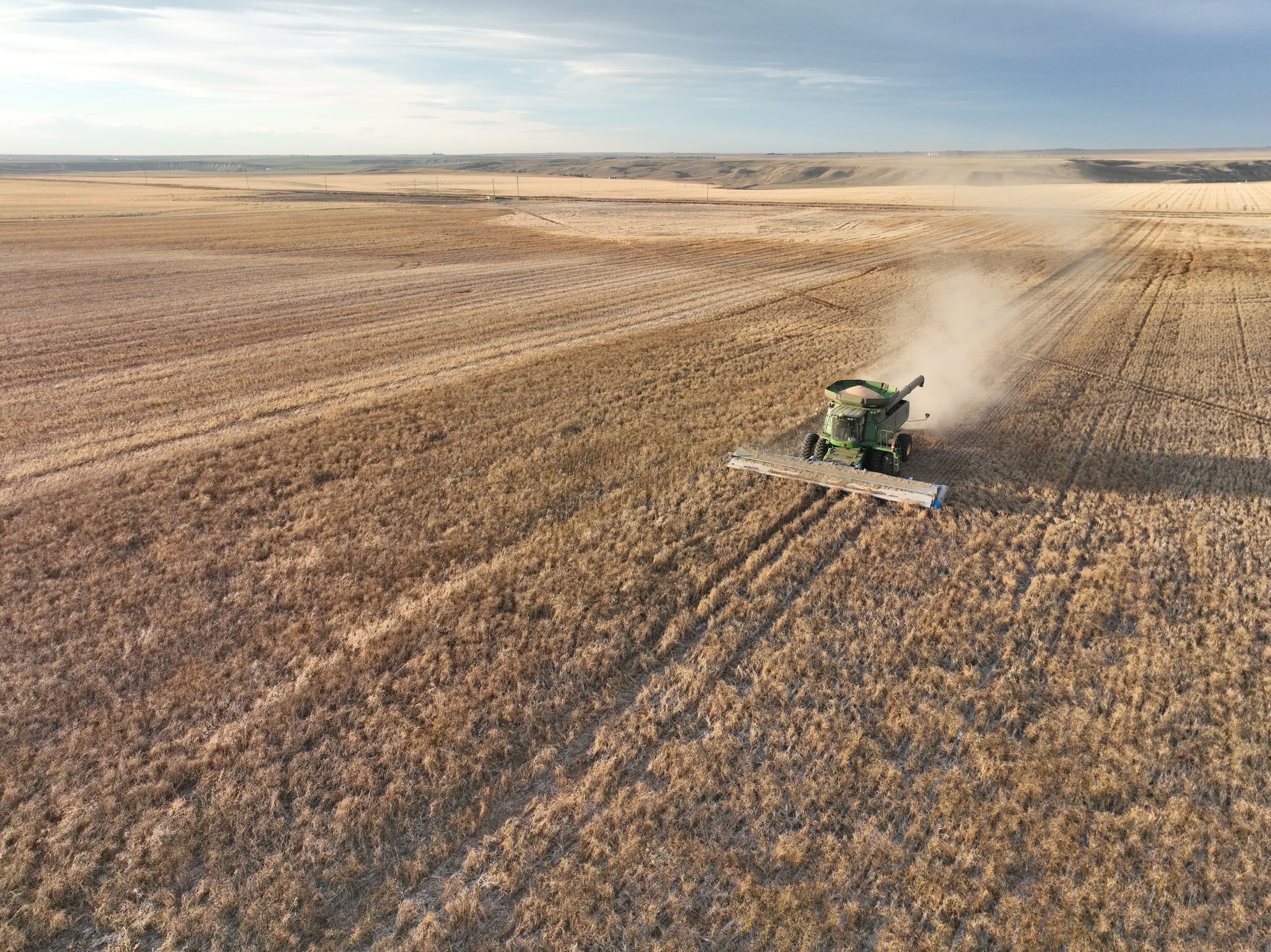
The project’s origins can be traced to the extremely dry year of 2021, which left many Lakeland area producers in need of feed and water resources. Canola crops withered, yielding as little as 30 per cent of normal, and overgrazed pastures produced less in the following year.
In an innovative project led by RDAR (Results Driven Agriculture Research), pulse growers may have found a new market for their frost-damaged faba beans: feeding them to pigs. Frost-damaged faba beans, typically considered waste, are now being evaluated for their nutritional value in swine diets, potentially offering a cost-effective feed alternative for producers and an expanded market for pulse farmers.
Strydhorst is well-known in the cropping industry with over 20 years in research and agriculture. She holds a PhD from the University of Alberta and has previously held positions with Alberta Pulse Growers, Alberta Agriculture, Alberta Wheat and Barley Commissions and most recently, her own consulting firm, Sheri’s Ag Consulting Inc. Strydhorst also farms with her family near Neerlandia, Alta.
Canola breeding has come a long way since Canadian researchers isolated and bred low erucic acid Brassica napus plants in the 1970s. Canadian canola growers have benefitted from the introduction of herbicide-resistant traits, as well as specialty oil, drought tolerance, season length and, of course, ever-increasing yield.
When producers go out to their cattle in late winter or early spring and see them itching, or with bald patches, their mind usually thinks lice infestation. Sometimes they run them through and give the cattle insecticide treatment, or have their veterinarian examine them.
We had the opportunity to connect with cow-calf operation owner Kirk Sorensen, to talk about his experience with OFCAF and how this program may be able to help other producers transition into new farming ideas.
OFCAF re-opens, RDAR on the Road, Project Approvals, Microcredentials, blog.
OFCAF re-opens, RDAR on the Road, Research for Pulse Growers, Microcredentials, and OFCAF blog.
After reviewing and approving more than 1,000 applications, RDAR is pleased to announce the re-opening of the 2024 OFCAF program for an additional intake of 150 funding applications. The new intake will fulfil RDAR’s commitment to distributing all available OFCAF funds to Alberta producers, enabling them to adopt impactful, sustainable changes on their farms and ranches.
At Livestock Gentec, researchers begin each project the same way — with a road trip. They head out of the city, gathering at farm gates and kitchen tables to ask Canadian livestock producers one question: “What keeps you up at night?”