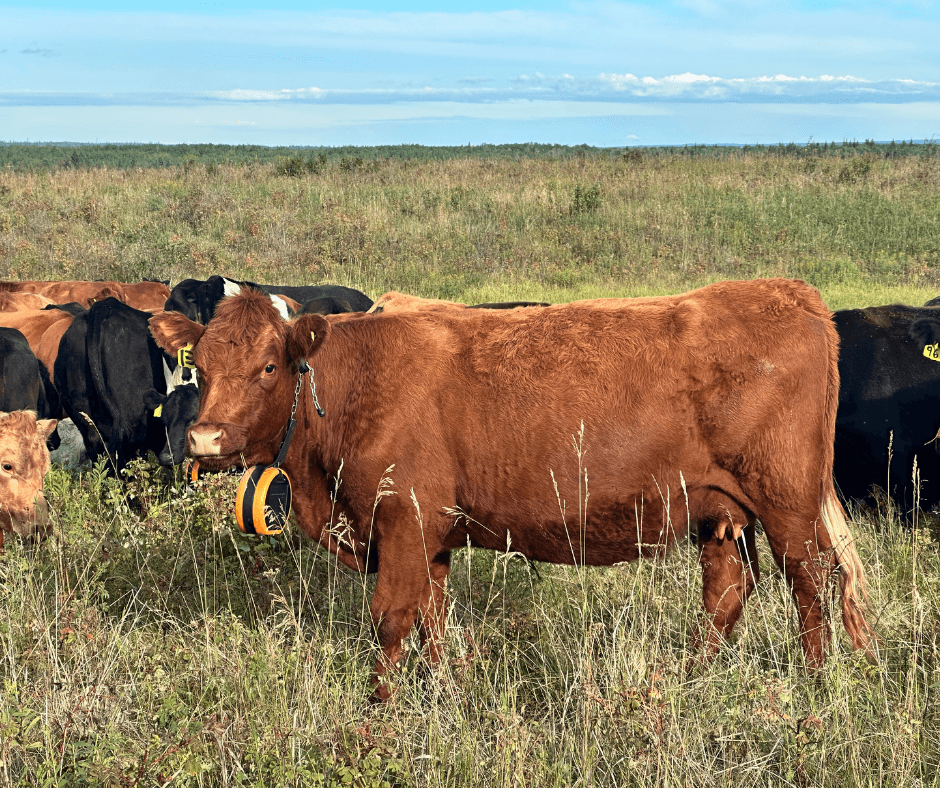
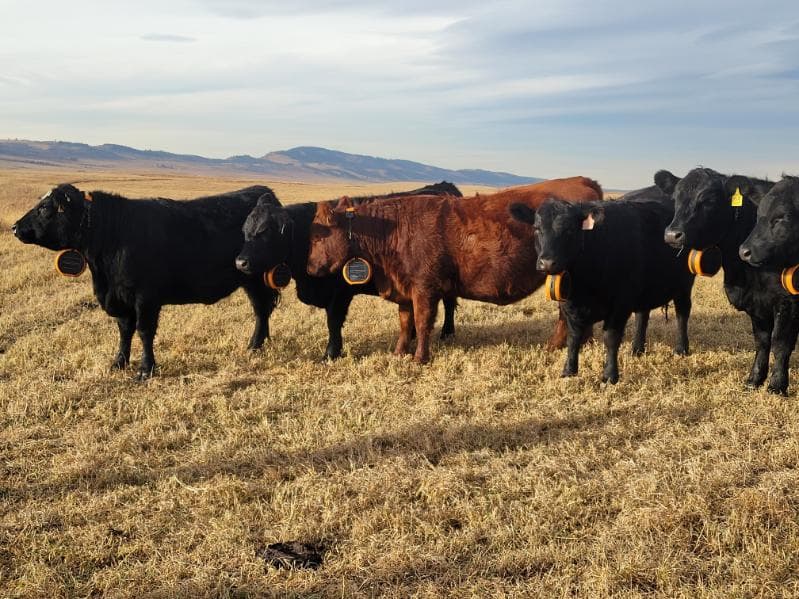
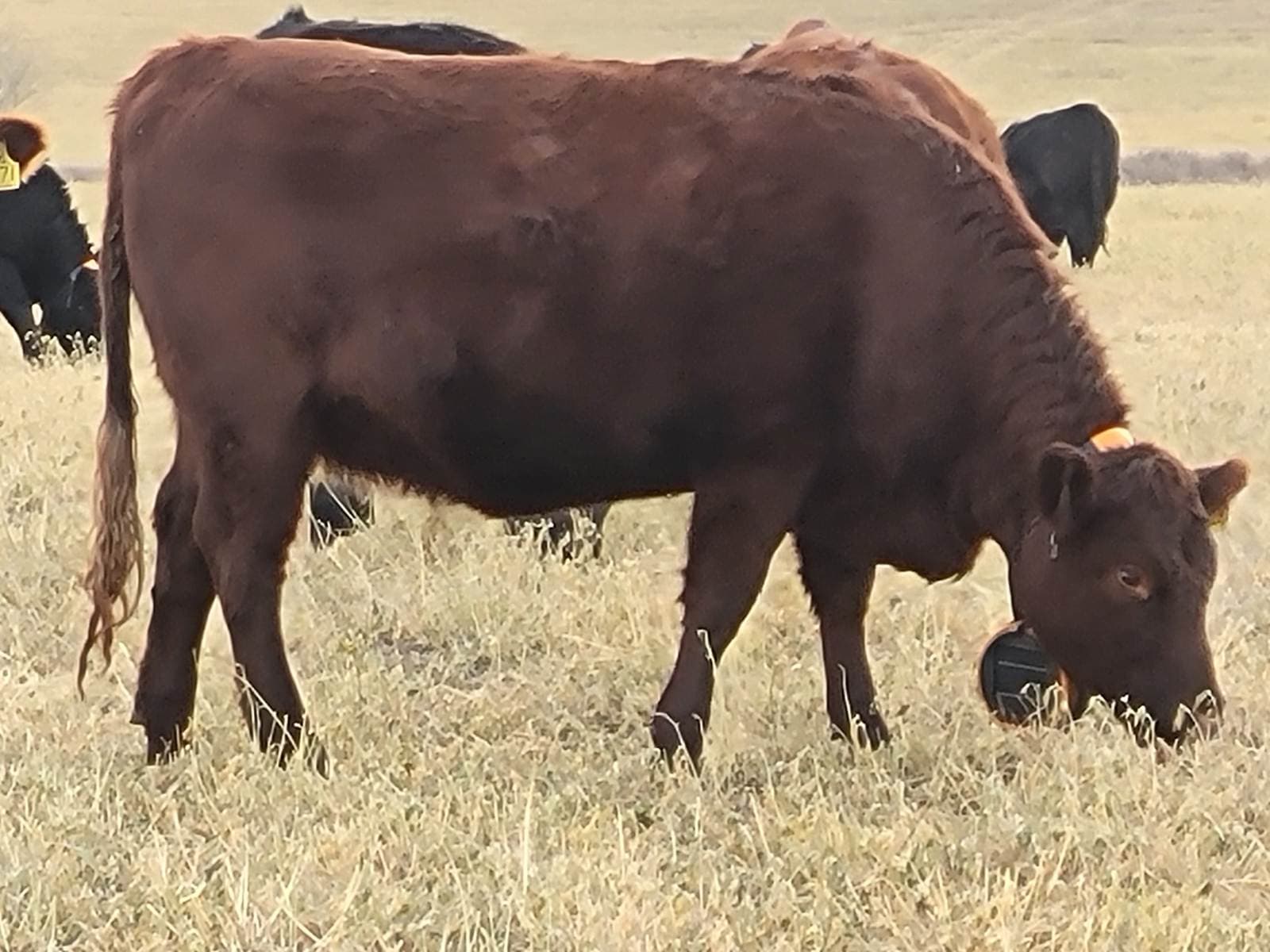
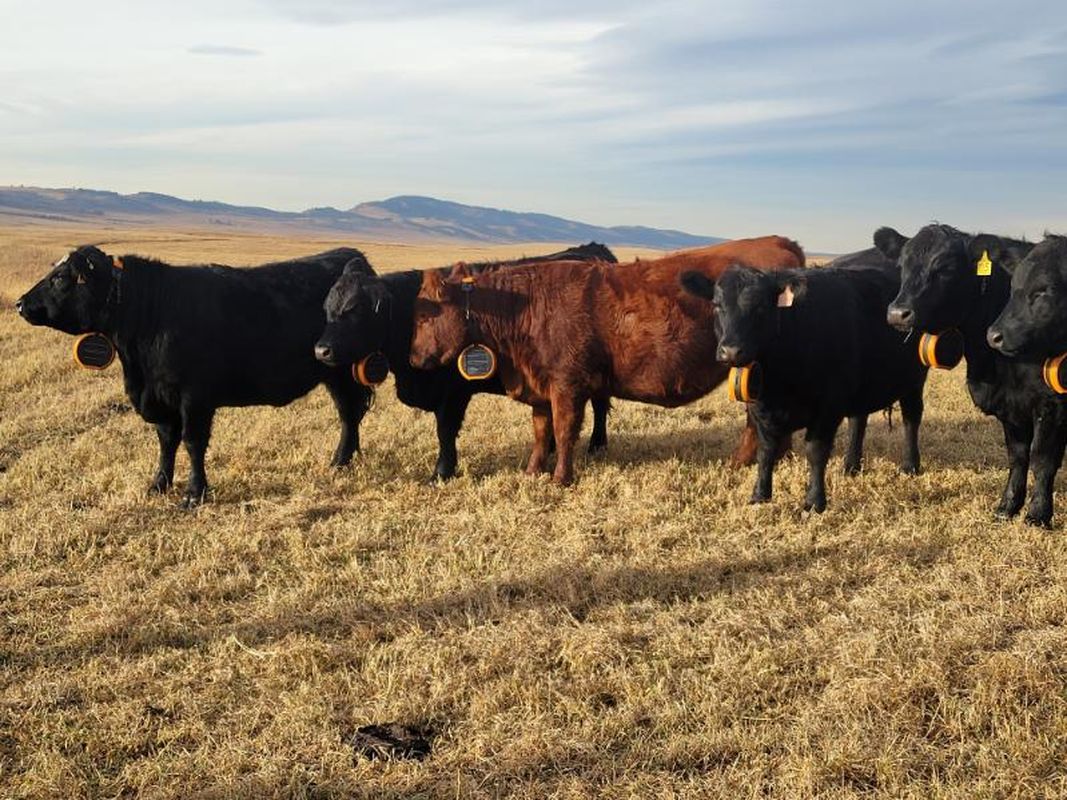
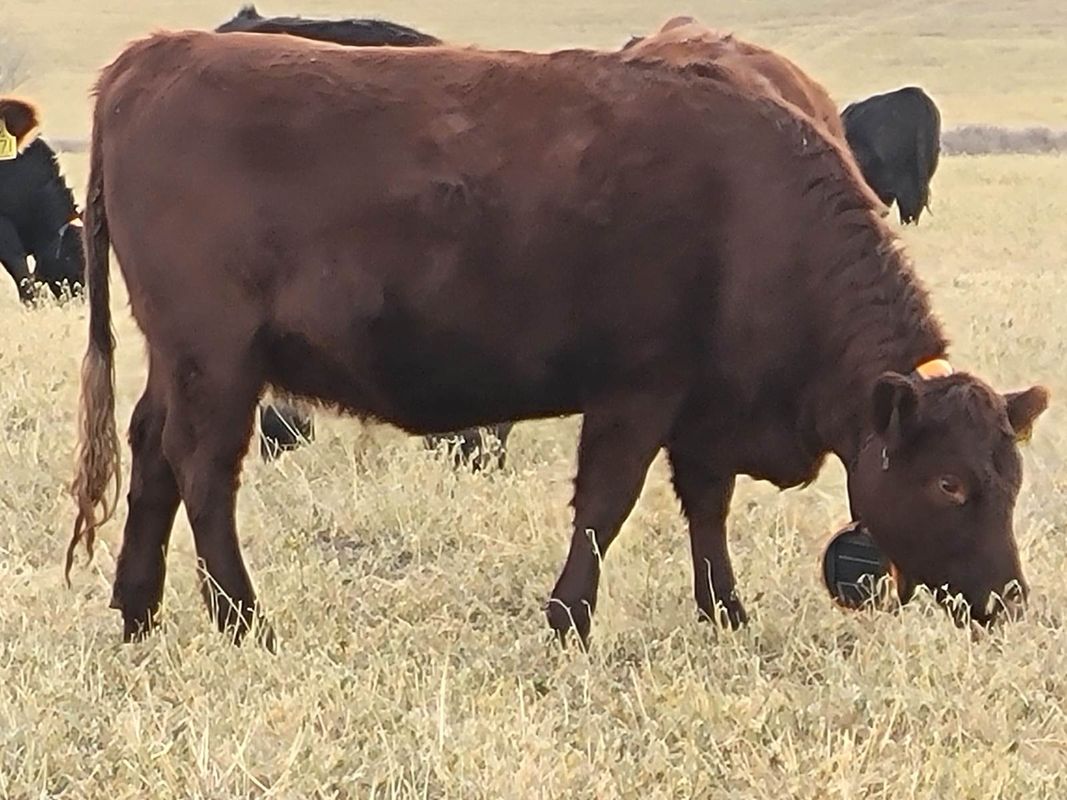
On a cold Alberta night, few jobs are less appealing than heading out to move polywire so cattle can keep making the most of a swath-grazing field. For producer Cody Claypool, virtual fencing offered a way to reduce that winter labour while still controlling how his herd accessed feed and helping capture the full value of swath grazing. Instead of bundling up in the dark to shift electric fence, Cody could check his cattle’s movements from the comfort of home — even in the middle of the night — and make management decisions from his phone.
That practical fit is what made the technology worth trying on the Claypool operation, where Cody manages a herd of approximately 400 cattle and is always looking for ways to make grazing more efficient without adding more hours to already full winter days. Cody’s parents first learned about virtual fencing at an Alberta Stockgrowers meeting, where RDAR CEO Mark Redmond and Olds Researcher Briana Elliot gave presentations. Their interest was piqued by the potential to control livestock movement without building or moving as many physical barriers. Mindful of the costs and risks that come with adopting new technology, the family saw the On-Farm Climate Action Fund (OFCAF), delivered in Alberta by RDAR, as a practical entry point. “Probably the main reason was just the cost and like the risk if it didn’t work out...with RDAR it was kind of a win-win.”
One of the biggest opportunities was winter swath grazing. By leaving feed in the field and letting cattle harvest it themselves, Cody could reduce the time, fuel, and equipment demands that come with hauling feed and managing manure. The challenge, as many producers know, is controlling access so cattle use the swaths efficiently instead of wasting feed or moving through the field too quickly. With GPS-enabled collars, Cody established virtual boundaries that guided the herd to fresh feed areas in stages. The system helped him stretch feed, maintain better use of the crop, and extend grazing later into winter without the same amount of daily fence work.
The remote management feature quickly became one of the most valuable parts of the system. Cody could monitor and move cattle from his smartphone, whether he was at home, away from the yard, or even vacationing in Hawaii. That did not replace stockmanship or the need to physically check cattle for health and welfare, but it did give him another layer of control and information between in-person checks. For a winter grazing system, that kind of flexibility can make the difference between pushing through a cold, late-night job and making an informed adjustment from the house.
The technology also suited the geography of his operation. “The [collars] worked really well. [The herd] were on a field across the river from our house. So, they were a ways away and that’s why we wanted to try them.” Some grazing areas are located across a river from his home base, terrain that would traditionally take time and effort to access and could create extra risk in poor conditions. With virtual fencing, Cody could shift cattle into a new grazing area without physically crossing over to move fence, while also keeping the herd away from potential river hazards.
Like any new tool, the collars came with a learning curve and a few realities to manage. Alberta winters tested the system, especially during extreme cold snaps. On days when temperatures dropped to around -30°C, the collars would temporarily stop functioning and Cody would receive a warning on his phone. By midday, once temperatures had risen, the system resumed normal operation. For Cody, the cold-weather limitation was worth noting, but it did not outweigh the labour savings, grazing flexibility, and management benefits he saw through the trial.
The results were clear on the Claypool operation: shorter feeding times, lower fuel use, and less labour tied up in moving fence and managing winter feed access. For other Alberta ranchers and producers, the takeaway is not that virtual fencing replaces good stockmanship, but that it can give producers another tool to manage feed, time, and risk more effectively. In the words of the Claypools, sometimes the best approach is simple: “give it a try.”
Cody has since been approved to receive funding this year to support his rotational grazing efforts using virtual fencing. For his operation, the continued investment reflects the system’s value in improving grazing management, winter efficiency, and overall herd oversight while giving him more flexibility in how and when cattle move through available feed.