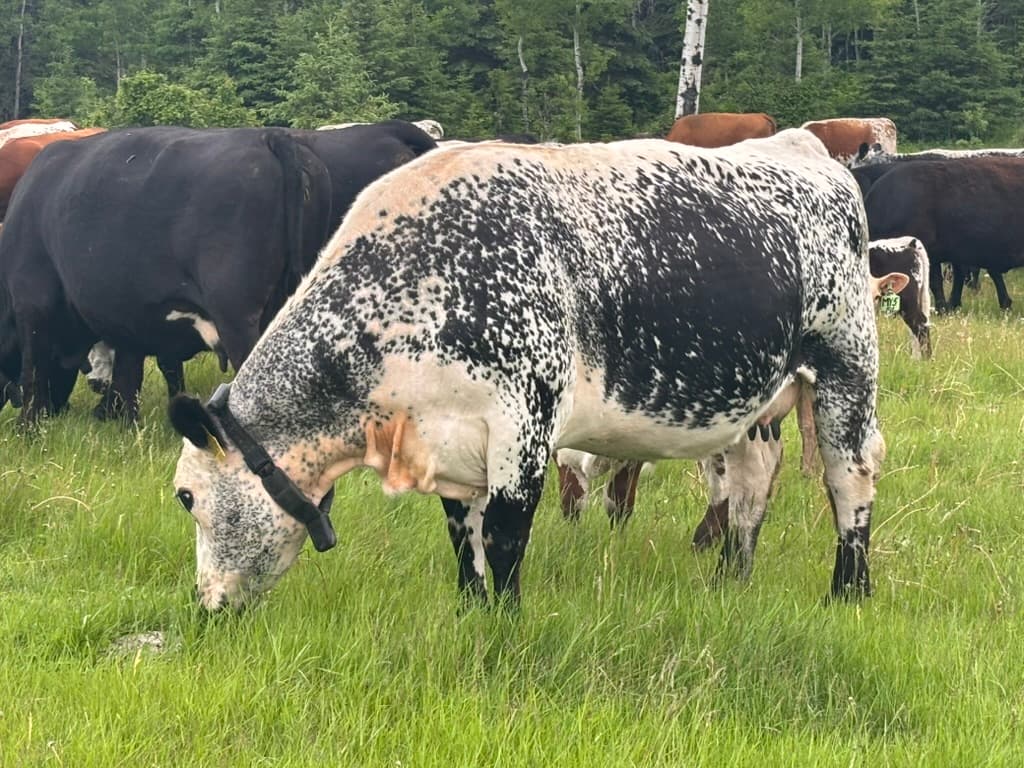
Interest in virtual fencing systems in Alberta has grown significantly through 2026, especially following the introduction of funding support for the technology for use in rotational grazing under the RDAR delivered OFCAF program.
Currently, only two systems are available to Alberta beef producers - Gallagher eShepherd and Halter. RDAR has already supported trials of Gallagher’s eShepherd collars in both research and on-farm environments since late 2025, and we are now pleased to announce that we have agreed to invest in trials of New Zealand based Halter’s technology at Olds College of Agriculture and Technology.
While virtual fencing technology may reduce infrastructure costs in some operations and support rotational grazing, efforts are ongoing to understand its functionality and efficacy in Western Canadian conditions. Olds College seeks to validate Halter virtual fencing technology in unique Alberta terrain and climate. Producers need locally relevant evidence using the technology available to them.
Led by the Technology Access Centre for Livestock Production (TACLP), the project aims to support beef producers interested in adopting virtual fencing as a rotational grazing management tool. Halter’s latest generation of collars will be tested on 35 cow–calf pairs and 35 yearlings at a partner producer’s operation, plus 80 cow–calf pairs on Olds College land to assess performance, usability, connectivity, and animal behaviour under commercial conditions.
Real-world data to support adoption, reduce uncertainty around labour and management, and build confidence in system reliability and animal response is important in understanding the cost benefit of virtual fencing. TACLP is aiming to deliver results that will guide technology refinement, extension programming, and responsible precision livestock adoption while improving decision-making, labour efficiency, and animal management.
Industry engagement will include producer-led implementation, hands-on management, structured feedback, and Olds College testing in an intensive grazing system.
RDAR is delighted to also be providing support for research into virtual fencing collars at Lakeland College, under RDAR Professor, Dr. Susan Markus. Outcomes of both these projects will help address adoption barriers with regionally relevant, producer-focused data, and we look forward to sharing the outcomes of this research when we can.
If you would like to learn more about OFCAF support for virtual fencing adoption in Alberta, please click here: RDAR-OFCAF
To learn more about the work TACLP is undertaking, please visit Smart Farm & Research.